

How did one HR leader make the shift from outdoor retail to biomedical research?
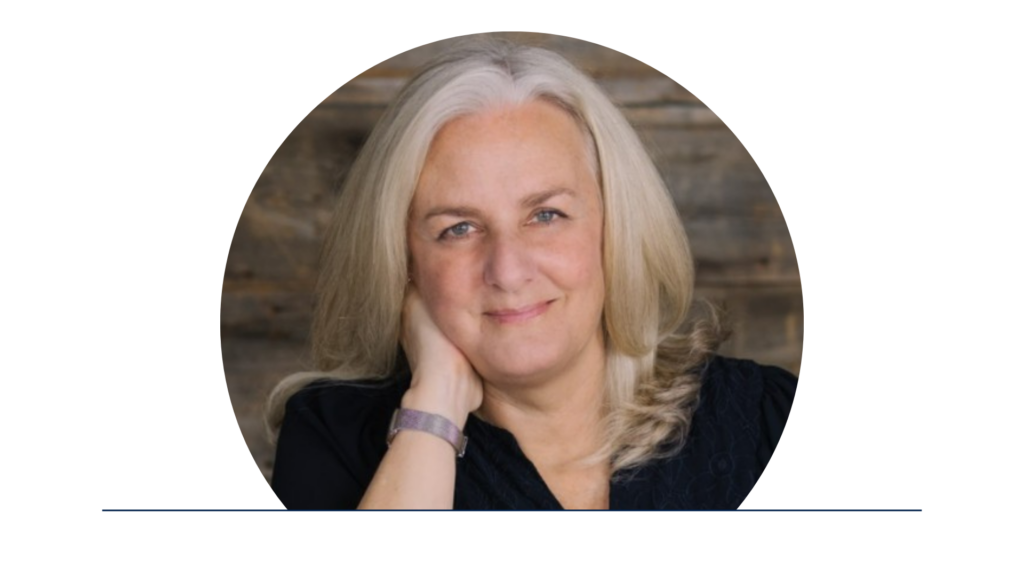
To learn more about how to make the most of transferable skills in a new industry, we talked with human resources leader Sarah Cox.
After spending more than two decades at L.L.Bean, including serving as Chief Human Resources Officer, Cox joined the Broad Institute as Chief People Officer. On paper, the move appeared unconventional, moving from a large, family-owned retailer to a leading biomedical research organization. She expected to spend months learning how an entirely different kind of institution worked.
The reality, however, was surprising.
“While the industry learning curve was steep,” she says, “other aspects were remarkably familiar.”
That familiarity didn’t come from understanding biomedical research. Instead, it came from recognizing the organizational patterns undergirding the institute itself.
Both L.L.Bean and the Broad Institute are organizations with deeply rooted identities shaped by their founders. Both attract employees who see their workplace as distinct from others in their field. Both rely on leaders who can preserve that culture while helping it evolve. Although the missions differ dramatically, the underlying leadership challenge is surprisingly similar.
“I expected there to be a real difference,” Cox says. “Instead, these organizations shared a common bond.”
For Cox, that realization reinforced an important lesson. Successful transitions are often less about mastering a new industry than recognizing the dynamics that organizations share.
Key Takeaways
- Look for patterns, not exact parallels.
- Bring curiosity without assumptions.
- Hire for capability first.
Look for Patterns, Not Parallels
One reason organizations hesitate to hire outside their sector is the assumption that every industry is fundamentally different.
Certainly, every organization has its own language, regulations, stakeholders, and operating model. Yet experienced leaders often spend less time focusing on those distinctions than on identifying recurring patterns.
Cox’s role has always centered on helping organizations build healthy cultures, support leaders, navigate change, and balance consistency with flexibility. Those responsibilities did not disappear because the context shifted from retail to science.
The ability to create structures and to know when to be flexible are valuable executive leadership skills in nearly every organization.
As she describes it, HR is “about 80 percent systems and 20 percent exceptions.”
The balance of creating structures while exercising judgment when circumstances demand flexibility is reflective of executive leadership more broadly. The ability to navigate ambiguity, respond thoughtfully to complexity, and adapt without abandoning consistency is valuable in nearly every organization.
Those are competencies developed over decades of leadership, not within a single industry.
Bring Curiosity without Assumptions
The value of transferable leadership is not that outside candidates arrive with better answers. It’s often that they arrive with different questions altogether.
When Cox joined the Broad Institute, the HR team had weathered a period of disruption, including leadership transitions, the pandemic, and uncertainty surrounding federal research funding. Rather than introducing sweeping changes, she focused on creating stability.
“I wasn’t coming in saying, ‘Here’s a better way,'” she explains. “It was more about saying, ‘You’re not doing it wrong. This is a great solution.'”
Her role was less about supplying innovation than creating the confidence for others to continue innovating themselves.
That perspective came, in part, because she was not trying to replicate another organization’s playbook. She was drawing on experience while remaining curious about the institution in front of her.
The combination of confidence and curiosity is often what allows leaders to transfer successfully between sectors.
She also found herself approaching colleagues without many of the assumptions that naturally develop within an industry. Coming from outside biomedical research meant she wasn’t influenced by professional reputations or institutional history. Instead, she was free to build relationships based on the people themselves.
That combination of confidence and curiosity is often what allows leaders to transfer successfully between sectors.
Hire for Capability First
For organizations, the broader lesson extends well beyond one executive transition.
When evaluating candidates from outside an industry, it is tempting to focus on what they have not done before. Have they worked in this sector? Do they understand our stakeholders? Will they learn quickly enough?
Those questions matter. But they should be balanced against another set of questions that are often more predictive of long-term success.
Can this leader navigate complexity? Can they build trust across different constituencies? Have they successfully led organizations through change? Do they demonstrate emotional intelligence, sound judgment, self-awareness, and a genuine ability to develop people?
Those capabilities are difficult to teach. Industry knowledge, while important, is often acquired more quickly than organizations expect.
As Cox sees it, competencies frequently matter more than credentials. Organizations that hire for leadership potential rather than sector familiarity both expand their talent pool as well as increase the likelihood of bringing new perspectives into the room.
Leadership challenges are becoming more complex, not less. Solving them may require looking beyond traditional career paths and recognizing that the strongest candidates are not always the ones who have spent their entire careers in the same industry.
“If you want to keep learning,” Cox observes, “it’s hard to imagine a better way than switching industries.”
More on Transferable Skills
Expand your thinking on recruiting, retaining, and engaging talent.